

So you are planning to rent a car in Zanzibar and explore the island on your own terms. That is one of the best decisions you can make. Having your own wheels means you set the schedule, stop wherever you want, and reach beaches that tour buses never visit.
But before you turn the key, you probably have questions. Is it safe? What side of the road do they drive on? What happens at police checkpoints? And what on earth is a Zanzibar driving permit?
We get these questions every single day. As a locally owned car rental company based in Zanzibar, we have been helping travellers navigate the roads here for years. This is the honest version not the sugar-coated tourist brochure.
Is It Actually Safe to Drive in Zanzibar?
Let us address the elephant in the room first. If you search online, you will find plenty of people saying driving in Zanzibar is dangerous, chaotic, or not worth the hassle. We respectfully disagree.
Is it different from driving in London, Berlin, or New York? Absolutely. The roads are narrower, the speed bumps are sometimes invisible, and you will share the road with pedestrians, bicycles, goats, and the occasional chicken.
However, the actual traffic volume outside Stone Town is surprisingly light. Most visitors who rent from us say the same thing: it was much easier than they expected.
The key is adjusting your expectations. You will not be driving at highway speeds. The island is only about 85 kilometres long and 39 kilometres wide, so the longest trip you will take, from Stone Town to Nungwi, takes roughly 90 minutes. Slow down, enjoy the scenery, and you will be fine.
Our honest assessment: If you are a reasonably confident driver and comfortable with left-hand traffic, you can handle driving in Zanzibar. If you are a nervous driver or this would be your first time on the left side of the road, consider our self-drive service with a driver for the first day, then take over the wheel when you feel ready.
Left-Hand Driving: What You Need to Know
Zanzibar follows left-hand traffic, a legacy of British colonial influence. If you are from the UK, Australia, Japan, or any other left-driving country, you will feel right at home. If you are from continental Europe, the Americas, or most of Africa, it will feel unfamiliar at first.
Here are the tips that help our customers adjust quickly:
- Take five minutes to get comfortable in the car before pulling onto a main road. Adjust your mirrors and find the indicator stalk; it is on the opposite side from what you are used to.
- Roundabouts go clockwise. This is the part that trips people up the most. When in doubt, follow the car in front of you.
- Stay left, pass right. Repeat that to yourself a few times before your first junction.
- Most of our fleet vehicles have automatic transmissions, which removes one layer of complexity. If you have never driven on the left before, we strongly recommend choosing an automatic.
After about 30 minutes of driving, most people tell us they barely notice the difference. The quiet rural roads outside Stone Town are a gentle place to build confidence quickly.
The Zanzibar Driving Permit: How It Works
This is the one thing that catches tourists off guard. Your home country driving licence, and even an International Driving Permit, are not valid on their own in Zanzibar. You need a temporary Zanzibar driving permit issued by the Zanzibar Revenue Authority.
Before you panic, the process is straightforward. Here is exactly how it works when you book with Zanzibar Rentals:
- When you book your car, send us a clear photo of the front and back of your driving licence via WhatsApp.
- We submit your application to the Zanzibar Revenue Authority on your behalf.
- By the time you land at Abeid Amani Karume International Airport, your permit is ready and waiting.
- The cost is $10 USD per driver. The permit is valid for up to 3 months.
No queuing at government offices, no passport photos, no paperwork on your end. We handle the entire process as part of every booking.
Just remember to carry both your Zanzibar permit and your original home licence; whenever you drive, police officers at checkpoints will ask to see both. We send the permit digitally; a screenshot on your phone is sufficient.
Need a car and permit arranged before you arrive? See our airport car rental page for the full meet-and-greet service at ZNZ.
Road Conditions Across the Island
Main Paved Roads: Good Condition
The primary road from Stone Town heading north toward Nungwi and east toward Paje is paved and generally in decent shape.
You will find smooth tarmac for most of the journey, with occasional potholes that are easy to spot and avoid.
The road from Stone Town south through Jozani Forest to Jambiani is also well-maintained. These are the roads you will spend most of your time on.
Secondary and Village Roads: Variable
Once you leave the main routes and head toward more remote beaches, roads become unpaved. Expect red dirt tracks, loose gravel, and occasional sandy patches.
These are perfectly passable in a standard SUV, our Toyota RAV4 handles them comfortably at 20–30 km/h. For the rainy season or very remote areas, the Toyota Prado with full 4WD gives you genuine peace of mind.
Stone Town: Avoid Driving Inside
Do not try to drive through Stone Town itself. The streets were built for donkeys, not cars, incredibly narrow, many one-way, with pedestrians, scooters, and market stalls at every turn.
Park at the Forodhani Gardens car park near the Old Fort (roughly 1,000 TZS per hour, an attendant watches the vehicles) and explore on foot. If you do end up driving in accidentally, keep your speed below 5 km/h, follow the one-way signs, and use your horn sparingly to alert pedestrians ahead.
Speed Limits and Traffic Rules
Zanzibar speed limits are lower than what most visitors are used to at home:
- Built-up areas and villages: 40 km/h
- Open country roads: 60 km/h
- Near schools, markets, and mosques: slow to a crawl
Speed bumps are everywhere, especially in villages. Some are well-marked with paint, others are not. The practical rule of thumb: if you see buildings on both sides of the road, assume a speed bump ahead and slow down.
There is also a local custom worth knowing: if the car in front of you flashes its right indicator on a straight road, it is signalling that the road ahead is clear for you to overtake. This is not an official rule, but local drivers use it consistently.
Seatbelts are mandatory for front-seat passengers. Smoking while driving is illegal. Using your phone while driving is also not permitted. Pull over if you need to check Google Maps.
Fuel Stations: Where to Fill Up and What to Know
There are plenty of fuel stations in and around Stone Town, along the main road to Nungwi, and near Paje. However, once you head into more rural areas, the southeast coast around Makunduchi, for example, stations become scarce.
Our number one tip: Fill your tank before leaving Stone Town or before heading to the east coast. Do not assume you will find a station along the way, especially outside peak tourist hours.
- Both petrol and diesel are available. Ask us at handover which fuel your rental car takes.
- Most stations accept cash only, Tanzanian Shillings preferred, and US Dollars are accepted at most. Always carry cash.
- All stations are full-service, an attendant fills your tank. A small tip of 500–1,000 TZS is appreciated but not required.
- A full tank on a Toyota RAV4 costs roughly 60,000–100,000 TZS ($25–40 USD), depending on current fuel prices.
Police Checkpoints: What to Expect
Police checkpoints are common across Zanzibar, especially on the main routes between Stone Town, Nungwi, and the east coast. You will almost certainly encounter at least one or two during your trip. They are routine traffic stops, not something to be alarmed about.
Here is exactly what happens:
- An officer will wave you over to the side of the road. Slow down and stop.
- Greet them with a smile and a friendly "Jambo" (hello in Swahili). This goes a long way.
- They will ask to see your Zanzibar driving permit and your home country licence. Show both.
- They may also ask for the car rental agreement or insurance papers. We provide all documents at handover, keep them in the glovebox.
- If everything is in order, they will wave you on. The entire stop usually takes under two minutes.
Important: If an officer issues a fine, always ask for an official written receipt. Do not pay cash without documentation. If anything feels unusual, call us immediately. Our number is on the dashboard of every rental car, and we can speak with the officer directly on your behalf.
Night Driving: Why We Recommend Against It
We strongly advise avoiding driving after dark in Zanzibar, especially on your first day or two. The practical reasons:
- Many roads have no street lighting outside Stone Town
- Pedestrians and cyclists walk along the road at night without reflective clothing
- Livestock such as goats, cows, and donkeys, sometimes sleep on warm tarmac after sunset
- Potholes that are easy to spot during the day become invisible in the dark
Plan your driving so that you arrive at your destination before sunset. During the high season (June to October), sunset is around 6:15 PM. During the green season (November to May), it is closer to 6:30 PM.
If you do end up driving after dark, keep your speed very low and use dipped headlights. If you need a late-night airport pickup, we can arrange a driver to meet you instead.
Navigation and Getting Around
Google Maps works well across most of Zanzibar. However, mobile signal can drop in rural areas, especially on the southeast coast.
Download the Zanzibar offline map before your trip so that navigation continues working without a data connection.
- Google Maps is accurate for main roads, but can sometimes route you down narrow village tracks. If the road looks too small, trust your instincts and stick to the wider road.
- Local SIM cards with data are cheap and available at the airport. Airtel and Vodacom both offer tourist data packages for about $5–10 USD that last a week.
- If you get lost, ask a local. People in Zanzibar are incredibly friendly and happy to point you in the right direction.
Exploring Zanzibar by Car: 4 Destinations You Should Not Miss
One of the biggest advantages of having your own car is the freedom to explore Zanzibar at your own pace.
Here are four destinations we recommend to every customer, with practical driving notes for each. For a full day-by-day route covering all of these and more, see our 7-day Zanzibar road trip itinerary.
1. Stone Town — The Cultural Heart of Zanzibar
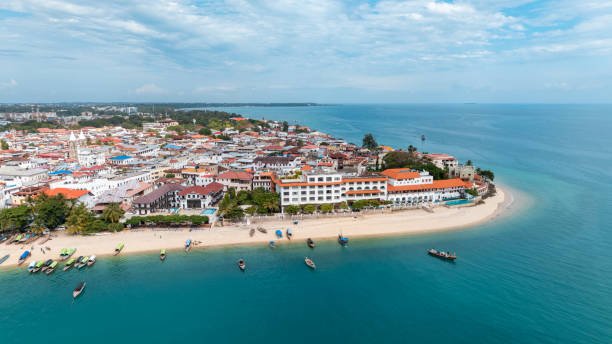
Driving time from airport: 15 minutes · Road condition: Paved, good quality
Stone Town is where most trips begin. The UNESCO World Heritage Site is a labyrinth of narrow alleys, carved wooden doors, rooftop restaurants, and centuries of history.
The Darajani Market buzzes with spice vendors in the morning; the Forodhani Gardens night market serves some of the best street food in East Africa.
Driving tip: Park at the Forodhani Gardens car park near the Old Fort (1,000 TZS per hour, attended). From there, everything in Stone Town is walkable within 15 minutes. Most customers pick up their car at the airport, spend their first night in Stone Town on foot, and head to the coast the next morning with a full tank.
2. Nungwi — The Northern Beach Town
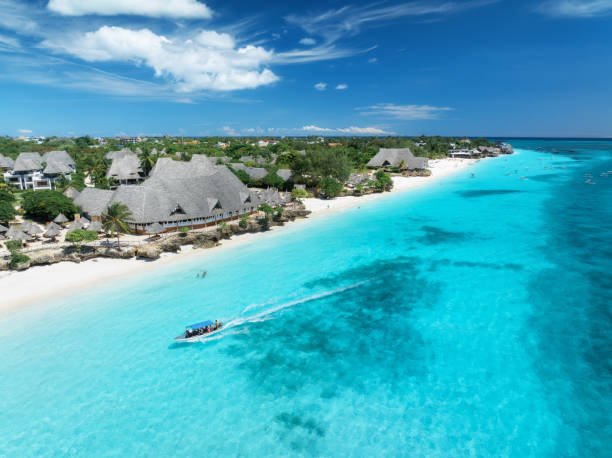
Driving time from airport: 75–90 minutes · Road condition: Paved the entire way
Nungwi sits at the very northern tip of the island with some of the most stunning beaches in Zanzibar. The water here stays deep at low tide, meaning you can swim any time of day, unlike the East Coast beaches.
The drive from Stone Town is straightforward and scenic: small villages, spice farms, and coconut plantations the whole way. Watch your speed through villages, frequent speed bumps, and school zones on this route.
3. Kendwa — The Quieter Alternative
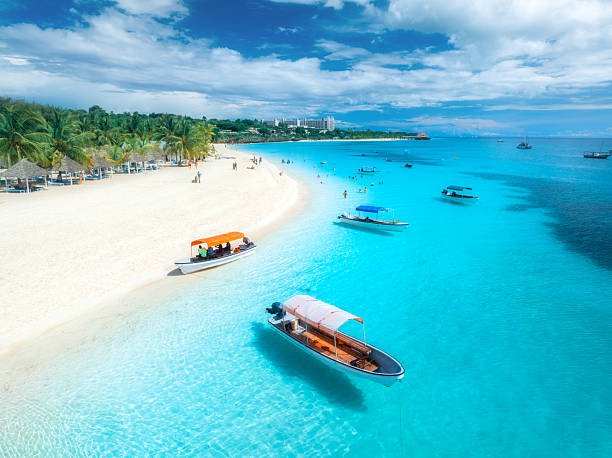
Driving time from airport: 70–80 minutes · Road condition: Paved to the turnoff, then a short dirt road (2–3 minutes)
Just 4km south of Nungwi, but a completely different atmosphere, calmer, more laid-back, and arguably a more beautiful beach. The turnoff from the main road is easy to miss; Google Maps handles it well.
The short dirt road to the beach is manageable in any of our SUVs, though it can get muddy in the rainy season. Kendwa hosts the famous Full Moon Party monthly worth knowing if you want to be there, or to avoid it.
4. Paje — The East Coast Kitesurfing Hub
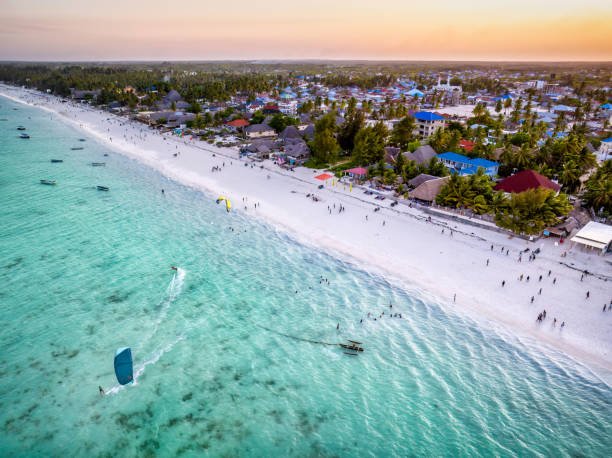
Driving time from airport: 60–70 minutes · Road condition: Paved and in good condition throughout
Paje is the kitesurfing capital of Zanzibar, but even if you have no interest in kites, the beach is extraordinary.
The drive from Stone Town takes you through Jozani Forest, home to Zanzibar's endemic red colobus monkeys. Stop for an hour on the way; entry is around $12 USD, and the monkeys are remarkably tame.
The road from Paje south to Jambiani is coastal and gorgeous; if you have time, keep driving 20 minutes further south for some of the quietest, most unspoiled beaches on the island.
Fuel note: fill up in Paje before heading further south, as stations become rare on the southeast coast.
What to Watch Out For on Zanzibar Roads
- Motorbikes and scooters are everywhere, and riders do not always follow traffic rules. Give extra space and always check mirrors before turning.
- Pedestrians on the road are constant. Zanzibar has very few sidewalks outside Stone Town; people walk along the road edge, sometimes with children. Slow down through every village.
- Speed bumps without warning: Some villages have speed bumps that are not painted or marked. If you see a settlement ahead, reduce speed automatically.
- Right-hand indicator flash: a local custom where a driver flashes their right indicator on a straight road to signal the road ahead is clear to overtake. Not official, but universally used by locals.
- Rainy season roads: between March and May, low-lying dirt roads can flood quickly after heavy rain. Stick to paved routes, and you will be fine.
Which Car Is Best for Self-Drive Zanzibar?
Based on the routes most tourists take and the roads they encounter, here is our honest recommendation:
The Toyota RAV4 is the best all-round vehicle for Zanzibar. It handles tarmac roads smoothly and sandy beach tracks without drama, fits 5 passengers with luggage, and is fuel-efficient for island driving. The 3-door starts at $25/day and the 5-door at $30/day. For Nungwi, Paje, Kendwa, and Jambiani, this is all you need.
The Toyota Prado is the right choice if you are visiting during the rainy season (April–May), planning to explore remote areas like Muyuni or the far north, or simply want the most capable vehicle on the island. At $150/day, it is a premium option, but it handles absolutely anything Zanzibar can throw at it.
Browse our full fleet; every vehicle includes full insurance, unlimited mileage, GPS, and your Zanzibar driving permit arranged before arrival. Or read our dedicated self-drive car rental page for a full comparison of vehicles with pricing and availability.
Your Pre-Drive Checklist
- ✅ Zanzibar driving permit and original home licence are both accessible in the car
- ✅ Car rental agreement and insurance documents in the glovebox
- ✅ Passport copy (leave original in your hotel safe)
- ✅ Cash in TZS or USD for fuel and parking
- ✅ Offline Google Maps of Zanzibar downloaded on your phone
- ✅ Our WhatsApp number saved: +255 775 900 001
- ✅ Full tank of fuel before leaving Stone Town
- ✅ Sunglasses: the tropical sun on East Coast roads in the morning is blinding
Frequently Asked Questions
Yes. Traffic outside Stone Town is light, main roads are paved and in decent condition, and most visitors find it much easier than expected.
The key adjustments are left-hand traffic, driving slowly through villages, and avoiding night driving.
We provide driving tips, 24/7 WhatsApp support, and all necessary documents with every rental.
You do not need an IDP, but you do need a Zanzibar local driving permit (~$10) on top of your home country licence.
We arrange this before you arrive. An IDP is optional and not required by Zanzibar authorities or by us.
The left side, like the UK, Kenya, and South Africa.
The steering wheel is on the right.
Most rental cars in Zanzibar are automatic, which makes the adjustment easier.
Allow 20–30 minutes on quiet roads to feel comfortable.
40 km/h in built-up areas and villages.
60 km/h on open country roads.
Near schools, markets, and mosques, slow to a crawl regardless of posted signs.
Speed bumps are common and not always marked; reduce speed automatically whenever you approach a settlement.
Yes, it takes 75–90 minutes on a fully paved road.
The route is straightforward, well-signed, and one of the most popular self-drive journeys on the island. A
RAV4 handles it comfortably in any weather.
Yes. Our agent meets you at ZNZ arrivals with a name board.
There are no car rental desks at the airport itself; all reputable operators use meet-and-greet.
See our airport car rental page for full details on the pickup process.
Ready to Explore Zanzibar by Car?No deposit · Permit arranged before you land · Toyota SUVs from $25/day→ View our self-drive car rental service→ Browse the full fleet — RAV4, Harrier, Prado & more→ Need airport pickup? See our ZNZ meet & greet service